


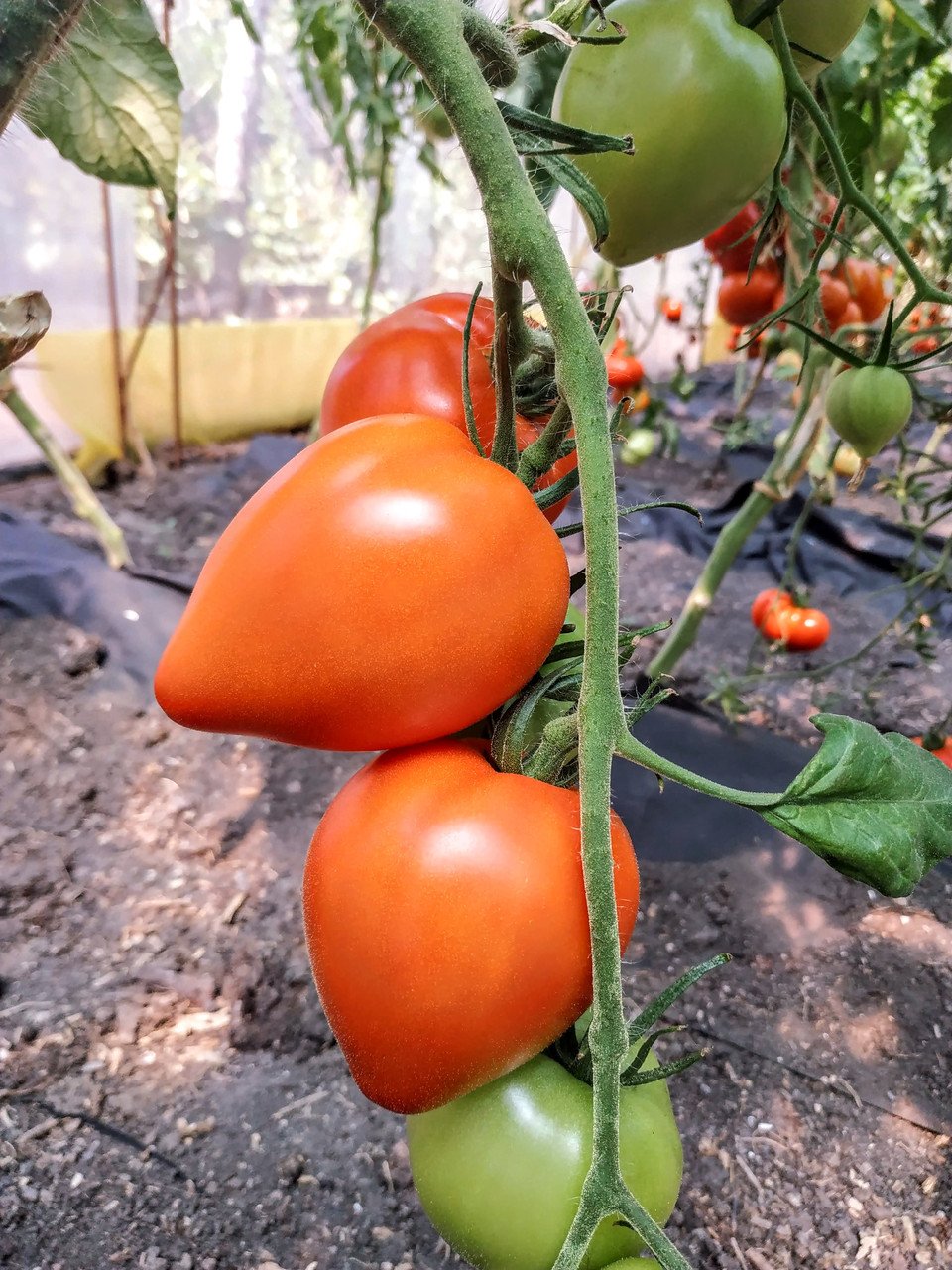
Cover photograph: Pastukh (Shepherd) tomato from the Seed.ua catalogue. The photograph illustrates this article; the research discussed below used Ninja tomatoes.
You slice a handsome ripe tomato, expecting that unmistakable summer flavour. Then comes the disappointment: it looks better than it tastes. Choosing different seed is one response. Another question starts below the plant: could the soil amendment programme help shape the eating experience?
A University of Queensland team investigated compost made from food and garden organics, known as FOGO. The findings caught the attention of Food & Wine. For growers, they offer a useful reason to think about compost alongside fruit quality, rather than judging a season only by the weight of the harvest.
What the tasting actually showed
The field comparison used Ninja tomatoes. At five days after picking, individual sensory attributes showed no statistically significant treatment differences. At day twelve, 36.6% of tasters selected “sweet” for the FOGO fruit, compared with 14.6% for the control. Forty-one people participated in this second session.
Those percentages describe tasting responses, not a doubling of sugar. This was a single-farm comparison with limited independent field replication, so the result needs testing across other settings.
The journey from picking to eating matters
The university reports a more favourable flavour profile after storage, alongside differences in soluble components, malic acid and umami-related amino acids. It reported no noticeable yield difference. Compost was added within a conventional growing programme that also used mineral fertilisers.
That gives a market gardener an interesting extra question. Alongside “How much did we harvest?”, ask “What will this tomato taste like when the customer eats it?” A tasting straight off the plant is valuable, but it tells only one part of that story.
Check the soil before adding another load
Choose finished, mature compost. University of Minnesota Extension explains that repeated excessive applications can build up phosphorus and soluble salts, particularly in protected growing spaces. Compost composition varies; a soil test can help establish whether more is appropriate. This tomato study does not provide a universal application rate for sweeter fruit.
A small comparison for your next growing season
Here is our suggested starting point: use one tomato, such as Pastukh, listed as Shepherd in our English catalogue, and plan several comparable plots. Label the treatments and record the source and quantity of any compost. Keep the rest of the care as consistent as possible.
- Pick fruit at comparable ripeness and record the harvest date.
- Compare several fruits from each treatment, both fresh and after the same storage interval.
- Give samples anonymous codes. Ask several people to score sweetness, acidity, aroma and texture before revealing the treatment.
- Record yield, work and input costs alongside taste. Repeat the comparison with another picking.
This will not replace a replicated research trial, but it creates a useful record for your own decisions. The most interesting result may be a question to investigate again next season. Write down the growing conditions as carefully as the tasting scores.
Our Pastukh photograph is an invitation to plan that season, rather than evidence of a compost response in this particular tomato. Explore heart-shaped tomatoes or read our guide to heat-tolerant tomato hybrids. For international seed enquiries, contact Lazarev Seeds on WhatsApp.
Sources and further reading
An original editorial account prompted by Food & Wine’s coverage, checked against Wang and colleagues in npj Science of Food (2026) and the University of Queensland research announcement. Growing context: University of Minnesota Extension on excessive compost applications.